









Gmail Account Types: Important Things to Know About New, Aged, Old & PVA Accounts in 2026
Understanding Gmail account types can make it easier to decide which type of account fits a particular purpose. Gmail is widely used for communication, work, education, online services, and digital activities. However, not every account has the same history, settings, or available features.
When people compare new Gmail accounts, aged Gmail accounts, old Gmail accounts, and Gmail PVA accounts, they often focus only on account age. In practice, there are several other factors worth considering, including account history, recovery options, security settings, and intended use.This guide explains the major Gmail account types, how they differ, what factors can be compared, and what users should consider before selecting among different Gmail account options.
What Are the Main Gmail Account Types?
There are several commonly discussed Gmail account types, and each can have different characteristics. The most noticeable difference is often the account’s age, although age does not automatically determine how an account has been used or maintained.
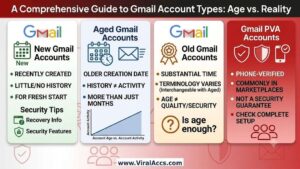
New Gmail Accounts
New Gmail accounts are recently created accounts with little or no account history. They can be suitable when someone simply needs a fresh Gmail address for personal communication, work, education, or another legitimate purpose.
Because these accounts have limited history, users should pay attention to security configuration. Adding appropriate recovery information and enabling available security features can help protect a new account,Google Gmail Security Tips
Among different Gmail account types, new accounts are generally the simplest to understand because their history starts recently. However, users should still follow Google’s applicable policies and security recommendations.
Aged Gmail Accounts
Aged Gmail accounts are accounts that have existed for a longer period. The term “aged” generally describes account age rather than guaranteeing a particular level of activity, trust, or performance.
When comparing Gmail account types, it is important to remember that an older creation date does not necessarily mean an account has been actively used throughout that period. Account age and account history are related but different concepts.
Users researching aged Gmail accounts should therefore consider more than the number of months or years since creation.
Old Gmail Accounts
Old Gmail accounts generally refers to accounts that have existed for a substantial amount of time. In many discussions, “old” and “aged” are used interchangeably, but the exact terminology can vary between providers and users.
The important point when comparing Gmail account types is to understand what information is actually available about an account. Age alone does not establish the quality, security, or suitability of an account.
Gmail PVA Accounts
Gmail PVA accounts usually refers to accounts described as phone-verified accounts. The term PVA is commonly used in online account marketplaces and discussions to indicate that a phone number was used during verification.
However, phone verification should not be confused with a guarantee of account security, longevity, or compliance. When reviewing Gmail account types, users should consider the complete security and recovery setup rather than relying on a single verification attribute.
Gmail Account Options
Different Gmail account options may appeal to different users depending on their requirements. A person setting up an account for everyday communication may have different needs from someone managing a professional inbox or creating an account for educational purposes.
Understanding these differences is useful when evaluating Gmail account types because the right choice depends on the intended use rather than account age alone.
New vs Aged Gmail Accounts
One of the most common comparisons among Gmail account types is between new and aged accounts. The main distinction is the length of time the account has existed.
New Accounts
New accounts have a recent creation date and generally have limited historical information. They may be useful when starting a new personal or professional email identity.
The main consideration with new Gmail accounts is that users should properly configure security and recovery settings from the beginning. A new account can develop its own legitimate history through normal use over time.
Aged Accounts
Aged accounts have existed longer than newly created accounts. However, an aged account should not automatically be considered more secure or more useful.
When evaluating aged Gmail accounts, users should look at the available account information, security settings, recovery methods, and intended purpose. This makes the comparison between Gmail account types more meaningful than simply looking at the creation date.
Account History
Account history can provide additional context when comparing Gmail account types. Depending on what information is available, history may indicate whether an account has been maintained and used over time.
It is important not to assume that an old account has extensive activity simply because it was created years ago. Similarly, a new account can become a legitimate and useful account through normal activity.
Recovery Options
Recovery options are another important part of comparing Gmail account types. Users should understand which recovery methods are available and whether they can be properly managed.
Recovery information can become especially important if a user loses access to an account. Reviewing recovery settings should therefore be part of responsible Gmail account management.
Account Features
The available Gmail features can also influence the comparison. Depending on the account and Google’s current services, users may have access to features related to security, communication, storage, and account management.
When comparing Gmail account options, users should identify which features they actually need instead of assuming that an older account automatically provides additional functionality.
Use Requirements
The intended purpose should always be considered when comparing Gmail account types. Personal communication, education, professional correspondence, newsletters, and other legitimate activities can have different requirements.
Defining the purpose first makes it easier to determine whether a new account or an existing account is appropriate.
What Factors Should You Compare?
Account age is only one factor when evaluating Gmail account types. A broader comparison can provide a clearer understanding of what an account offers.
Account Age
Account age is the most obvious difference between new and old accounts. However, age should be treated as descriptive information rather than a guarantee of quality or reliability.
Someone researching old Gmail accounts should verify what “old” means in the particular context and avoid making assumptions based solely on an age claim.
Account History
Account history provides additional context beyond the creation date. If relevant information is available, it may help users understand how an account has been maintained.
This distinction is particularly important when comparing aged Gmail accounts with new accounts. Two accounts with different ages can have very different histories.
Recovery Options
Recovery options can affect how easily an account can be secured and recovered. Users should review available recovery information and ensure that it is accurate and appropriately controlled.
For all Gmail account types, recovery planning is an important part of account security.
Account Features
Features should be compared according to actual requirements. Users should identify whether they need particular Gmail capabilities before deciding between different Gmail account options.
It is also important to remember that Google’s services and features can change over time, so current availability should be checked directly through Google.
Security Settings
Security should remain a priority regardless of which Gmail account types someone is considering. Password management, recovery information, authentication features, and sign-in monitoring can all contribute to better account protection.
An older account should not be treated as automatically safer than a new account.
Intended Use
The intended use helps put all other factors into perspective. A simple personal inbox may require different settings from an account used for professional correspondence.
Therefore, comparing Gmail account types should begin with the actual requirement rather than the account’s age alone.
How Account Age Changes the Comparison
Account age can change how users evaluate different Gmail account types, but it should not be the only consideration.
New Gmail Account History
A new Gmail account naturally has limited history. Over time, normal and legitimate use can establish an account history.
When choosing new Gmail accounts, users should focus on correct setup, security, recovery, and compliance rather than expecting immediate benefits from account age.
Aged Gmail Account History
An aged account may have existed for months or years, but the available history can vary. An older creation date does not necessarily prove consistent activity.
This is why aged Gmail accounts should be evaluated based on verifiable information rather than assumptions.
Old Gmail Account Considerations
When looking at old Gmail accounts, users should distinguish between account age and account condition. An old account can still require updated security settings or recovery information.
The same principle applies across all Gmail account types: account age is one characteristic, not a complete measure of account quality.
Security and Recovery
Security and recovery remain important regardless of whether an account is new or old. Users should regularly review available security controls and keep recovery information current.
These practices are more important than simply choosing among different Gmail account types based on age.
How to Choose the Right Account Type
Choosing among Gmail account types becomes easier when the decision is based on practical requirements.
Define Your Use Requirements
Start by identifying why the account is needed. Determine whether it will be used for personal communication, education, professional correspondence, or another legitimate purpose.
Clear requirements make it easier to evaluate different Gmail account options.
Review Available Account Features
Check the features that are actually required. Avoid assuming that all Gmail account types provide identical functionality in every situation.
Check Recovery Options
Review recovery information and security settings before relying on an account. Proper recovery configuration can help reduce access problems later.
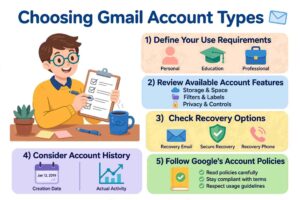
Consider Account History
If account history is relevant, distinguish between the creation date and actual historical activity. This is particularly important when comparing old Gmail accounts and aged Gmail accounts.
Follow Google’s Account Policies
Every Gmail account should be used according to Google’s applicable terms and policies. Neither account age nor phone verification provides an exemption from platform rules.
Responsible usage is therefore an essential consideration when selecting between Gmail account types.
Frequently Asked Questions
What Are the Main Gmail Account Types?
Commonly discussed Gmail account types include new accounts, aged accounts, old accounts, and accounts described as phone-verified.
What Is the Difference Between New and Aged Gmail Accounts?
New Gmail accounts have a recent creation date, while aged Gmail accounts have existed for a longer period.
Are Old Gmail Accounts Different From Aged Gmail Accounts?
The terms are often used similarly, although “old” and “aged” may have different meanings depending on the context.
What Are Gmail PVA Accounts?
Gmail PVA accounts generally refers to accounts described as phone-verified accounts, meaning a phone number was used during verification.
How Should I Compare Gmail Account Options?
Compare Gmail account options based on account age, history, recovery settings, security, features, and intended use.
Conclusion
Understanding Gmail account types is useful for anyone comparing different Gmail account options. New Gmail accounts, aged Gmail accounts, old Gmail accounts, and Gmail PVA accounts can have different characteristics, but account age alone does not determine security, quality, or suitability.
A better comparison considers account history, recovery options, available features, security settings, and use requirements. Users should also remember that Gmail accounts must be used responsibly and according to Google’s applicable policies.
By looking beyond age and focusing on practical requirements, users can develop a clearer understanding of the different Gmail account types and make more informed decisions about their Gmail account options.